
When Self Love Goes Beyond Short-Term Comfort
In recent years, the idea of self love has often been associated with rest, treating yourself, or taking a break from daily routines. While these actions are important for mental well-being, self love can also be interpreted in a broader and more sustainable way: taking care of your financial future.
Financial well-being is a critical part of long-term personal stability. According to the OECD Financial Literacy Framework, financial literacy refers to the knowledge and skills needed to make effective financial decisions that support long-term financial well-being.
https://www.oecd.org/financial/education/oecd-infe-core-competencies-framework-on-financial-literacy.htm
However, financial literacy remains a challenge in many countries, including Indonesia.
Based on the National Survey on Financial Literacy and Inclusion by the Financial Services Authority (OJK), Indonesia’s financial literacy rate was recorded at 49.68% in 2022, indicating that many individuals still lack sufficient understanding of financial management and investment strategies.
https://www.ojk.go.id/id/berita-dan-kegiatan/publikasi/Pages/Survei-Nasional-Literasi-dan-Inklusi-Keuangan-2022.aspx
This gap highlights the growing importance of financial education in helping individuals build a more secure and sustainable future.
Why Investment Matters in Long-Term Financial Planning
Investment is commonly defined as allocating resources or capital into financial instruments with the expectation of generating returns over time. However, beyond profit, investment plays a much deeper role in protecting financial value and maintaining purchasing power.
According to the World Bank, inflation continuously reduces the value of money over time, which makes it essential for individuals to manage their financial assets productively.
https://www.worldbank.org/en/topic/financialsector
Without proper financial strategies, savings alone may not be sufficient to maintain wealth in the long run.
This is why understanding investment is not merely optional. It has become an essential life skill in today’s economic landscape.
Key Concepts Everyone Should Understand About Investing
To make rational financial decisions, individuals need to understand several fundamental investment concepts.
1. Time Value of Money
The time value of money explains that money available today is more valuable than the same amount in the future because it can be invested to generate returns.
This concept is widely discussed in financial literature and explained in resources such as Investopedia.
https://www.investopedia.com/terms/t/timevalueofmoney.asp
Understanding this principle helps individuals make more strategic financial decisions regarding saving, investing, and long-term planning.
2. Risk Appetite
Each investor has a different level of tolerance toward financial risk. In investment management, this is referred to as risk appetite.
Generally, investors fall into three categories:
Conservative investors
Prefer lower-risk investments that prioritize capital protection.
Moderate investors
Seek a balance between potential returns and manageable risk.
Aggressive investors
Are willing to accept higher risks in pursuit of higher potential returns.
According to Morningstar, understanding risk tolerance is one of the most important first steps before choosing an investment instrument.
https://www.morningstar.com/articles/1015271/understanding-risk-tolerance
Without recognizing personal risk tolerance, investors may make decisions that do not align with their financial goals or personal circumstances.
3. Investment Diversification
Diversification is a strategy that involves spreading investments across different assets to reduce potential risk.
This concept is widely recognized in modern portfolio management and is discussed in publications such as Harvard Business Review.
https://hbr.org/2020/03/a-refresher-on-diversification
By diversifying investments, individuals reduce dependency on a single financial asset and increase the resilience of their financial portfolios.
Financial Literacy as the Foundation for Rational Decision Making
Today’s financial landscape offers a wide range of investment opportunities, from gold and silver to stocks, mutual funds, and other financial instruments.
Without proper knowledge, individuals may easily fall into emotional decision-making or short-term market trends.
Financial literacy equips individuals with the ability to evaluate opportunities, assess risks, and align investment choices with long-term life goals.
Ultimately, investment is not only about numbers.
It is about making thoughtful decisions that shape one’s financial future.
Encouraging Financial Literacy Through Public Training
Recognizing the importance of financial awareness, many organizations have begun creating learning opportunities that help individuals develop a stronger understanding of personal finance.
As a national FMCG distributor in Indonesia, Borwita believes that operational excellence is not only built through strong business systems but also through individuals who possess sound financial thinking and long-term perspectives.
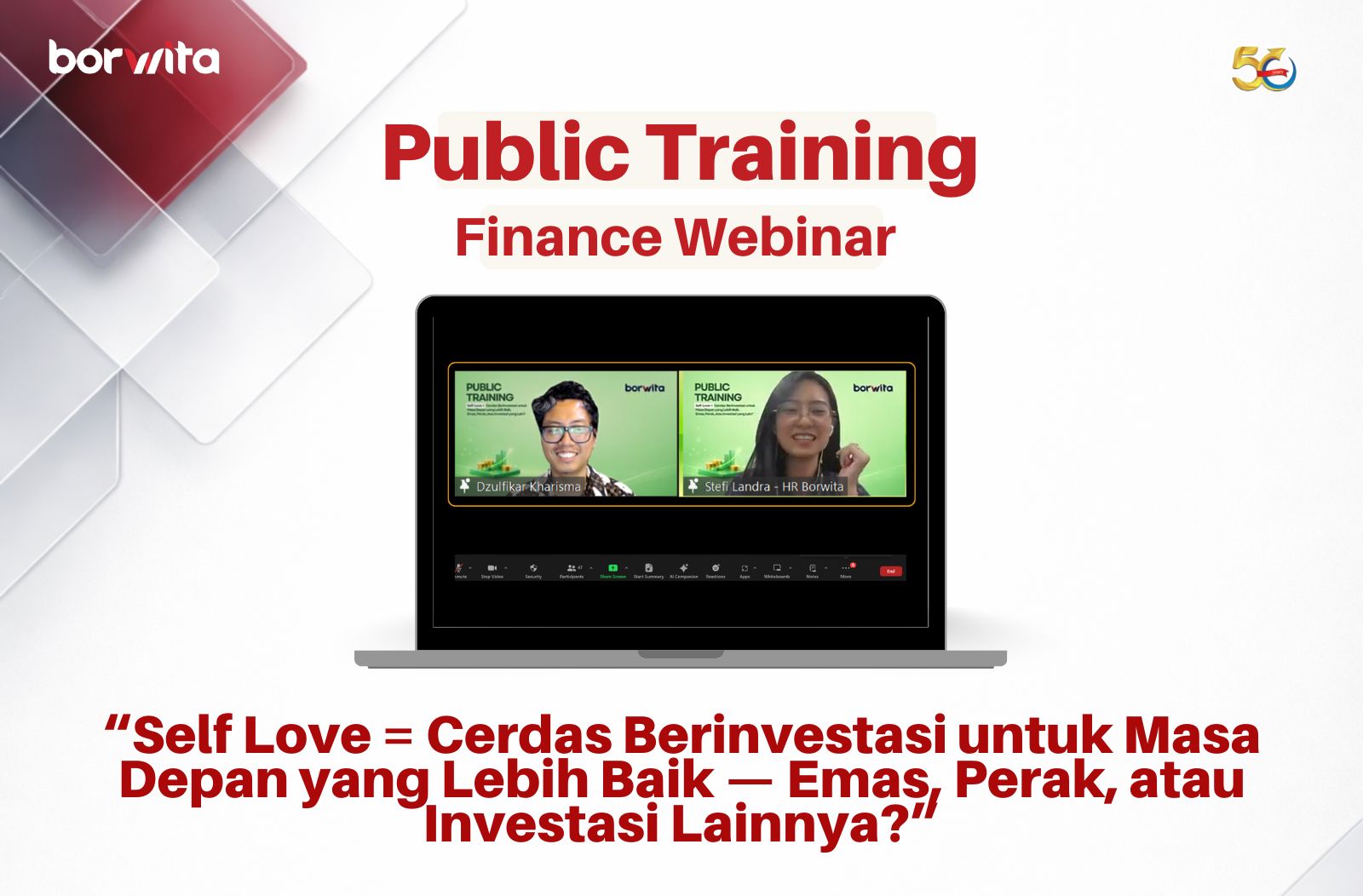
As part of its employee development initiatives, Borwita organized a Public Training session titled “Smart Investing for a Better Future.”
The session featured Dzulfiqar Kharisma, CFP®, Co-Founder of Dana Rakca Financial Planner Club, who shared insights on several important investment topics, including:
Fundamentals of investing
The concept of time value of money
Investment calculation simulations
Selecting investment instruments based on personal risk profiles
The session aimed not only to introduce investment instruments such as gold, silver, and other alternatives but also to encourage participants to develop a systematic and rational financial mindset.
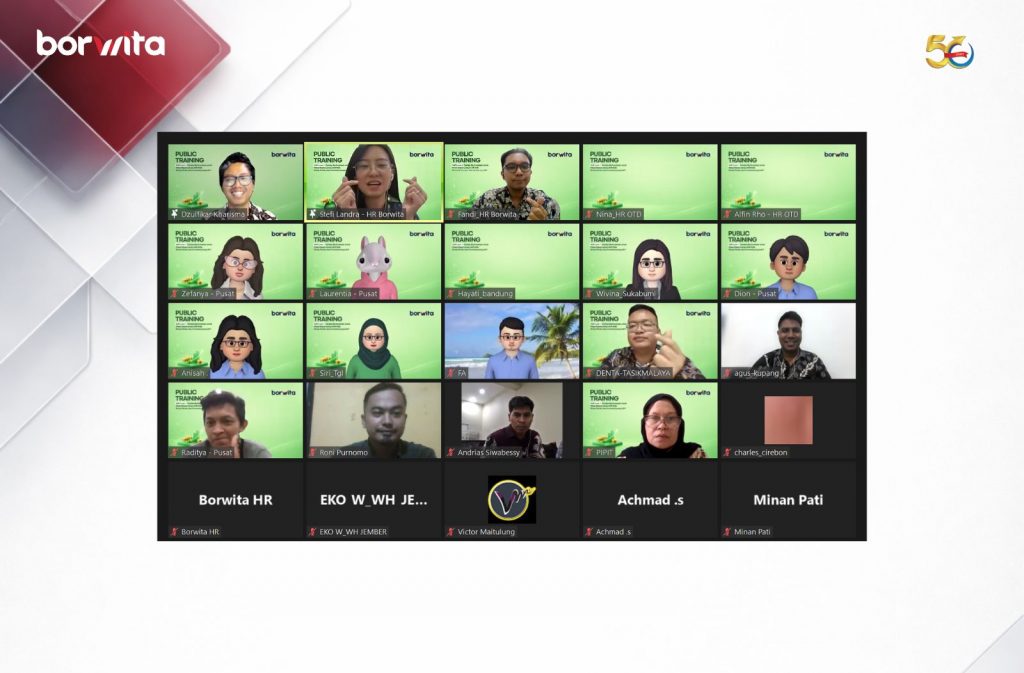
Hundreds of Borwita employees participated in the session via Zoom Meeting, demonstrating high enthusiasm through active discussions and interactive Q&A throughout the event.
#GrowatBorwita: Building a Growth Ecosystem for Talent
At Borwita, employee development goes beyond formal training programs. The company is committed to building a growth ecosystem that supports both professional and personal development.
Through various learning initiatives, Borwita encourages employees to continuously expand their capabilities, including strengthening financial literacy and personal financial planning.
Because in the end, strong organizations are built by individuals who are capable of thinking long term.
And often, the journey toward a better future begins with one simple step:
understanding how to manage and invest the value we hold today.