A Strategic Competency for Professional Excellence
Effective communication is a critical competency in today’s modern workplace. As organizations operate in increasingly dynamic, digital, and cross-functional environments, communication has evolved beyond the ability to speak or convey information. It is now a strategic capability, enabling clarity, alignment, and impactful collaboration across all levels of the organization.
According to the LinkedIn Workplace Learning Report, communication remains one of the most in-demand soft skills globally.
Similarly, insights from the Harvard Business Review highlight that ineffective communication is a key factor contributing to reduced team productivity and weakened cross-functional collaboration.
These findings reinforce a crucial reality: effective communication is no longer optional—it is foundational to organizational performance, leadership, and operational excellence.
Communication skills can’t be used as additional skills. However, in fast-paced industries such as FMCG distribution, where precision, speed, and coordination are essential, communication acts as the bridge that connects ideas, people, and processes. To better understand its significance, below are several reasons why communication is indispensable in the workplace.
Why Effective Communication Matters
1. Enhances Clarity and Minimizes Operational Risks
The Project Management Institute reports that 56% of project failures stem from poor communication.
In an industry characterized by high-volume operations and strict timelines as in FMCG , clear communication plays a vital role in reducing errors, accelerating execution, and ensuring alignment across teams.
2. Enables Ideas to Be Delivered Persuasively
Innovation often begins with great ideas. However, the organization only benefits from these ideas when employees can articulate them clearly, persuasively, and in a structured manner. Effective communication ensures ideas are not only expressed but understood, evaluated, and acted upon.
3. Strengthens Confidence in Professional Interactions
Clear and confident communication contributes significantly to professional credibility. Whether presenting to stakeholders, coordinating with operational teams, or engaging with customers, well-delivered messages enhance trust and support better decision-making.
4. Builds Stronger Collaboration Across Teams
Teams with effective communication practices demonstrate higher adaptability, faster decision-making, and improved problem-solving capabilities. This aligns with the collaborative nature of modern organizations, where success relies on seamless cross-functional synergy.
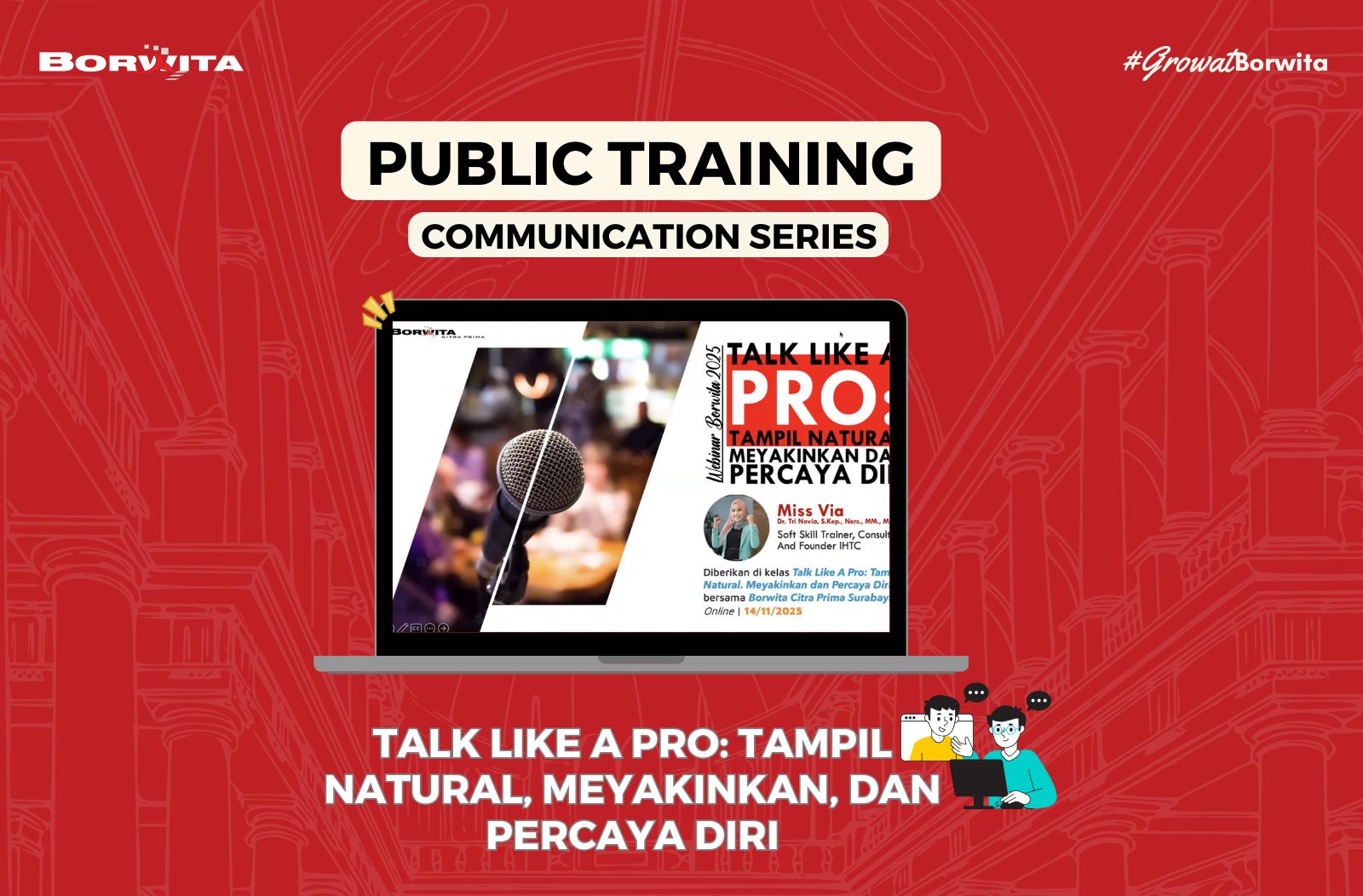
Beyond its strategic value, communication also shapes daily work dynamics. In Borwita, constant interaction occurs across departments, generations, and locations. To support these interactions, the Communication Series was designed to equip employees with practical tools for clear, structured, and respectful communication.
Communication in the Modern Workplace:
Today’s professionals are expected to:
- communicate naturally and confidently,
- deliver concise and structured messages,
- manage nervousness when presenting,
- demonstrate credibility through tone, body language, and presence,
- and articulate ideas persuasively in various business settings.
In the FMCG distribution industry where speed and accuracy are essential effective communication is a critical enabler of business continuity and process optimization.
Effective Communication Practices for the Borwita Work Environment
Borwita’s operations across branches, warehouses, and the head office require a high degree of coordination. Clear communication ensures tasks are executed efficiently and cross-functional partnerships operate smoothly. Through the Communication Series with Miss Novia, several important principles were emphasized:
1. Understand Your Role Before Communicating
Each function within the organization carries distinct responsibilities. Communication becomes more targeted and effective when employees understand their roles whether as decision-makers, implementers, or information providers.
2. Use Clear, Direct, and Precise Language
In fast-moving operations, ambiguous instructions can result in delays and errors. Short, specific messages minimize miscommunication across sales, logistics, finance, and warehouse teams.
Example discussed during the session:
Instead of: “Please process this as soon as possible.”
Better: “Please process this DO before 11 AM because the truck loading starts at 12 PM.”
Clear instructions accelerate execution and reduce unnecessary follow-ups.
3. Adapt Communication Style to the Audience
Borwita’s workforce spans multiple generations, Gen Z, Millennials, and experienced senior employees. Each group has distinct communication preferences:
- Gen Z prefers concise, fast, and visual communication.
- Millennials appreciate context and strategic reasoning.
- Senior team members value detailed processes and careful explanation.
Adapting communication style ensures messages are received accurately and interpreted correctly.
4. Apply the Three-Step Communication Technique
A key method emphasized during the session was the Three-Step Communication Technique:
- Think — Define the purpose of the message before speaking.
- Speak — Communicate clearly, concisely, and in a structured format.
- Confirm — Ensure the message is understood, through verbal or non-verbal cues.
This technique is particularly effective for meetings, coordination, and daily operational briefings.
5. Communication Is a Skill That Improves with Practice
Similar to other competencies, communication strengthens through consistent practice. By seeking feedback, observing others, and continuously refining one’s approach, employees can elevate their communication effectiveness, leading to improved teamwork and stronger internal relationships.
Communication involves more than speaking. It is the ability to understand, articulate, and ensure that messages are accurately received. At Borwita, strong communication is one of the pillars supporting operational speed, cross-functional collaboration, and superior internal and external service.
Through the Communication Series, employees are reminded that effective communication is not innate, it is cultivated. As we sharpen this skill, we not only enhance our individual performance but also contribute meaningfully to the growth and success of the organization.
Ultimately, effective communication moves us closer to our shared goal: working more cohesively, moving more efficiently, and progressing further together as One Borwita.